
Last updated October 17, 2026
 Sliding glass doors
 Single hung
 Double hung
 Horizontal roller
 Casement
 Bay & bow
 Entry doors
 Impact garage doors
 PGT
PGT CGI
CGIFree in-home measure and quote - PGT, CGI and CWS impact lines compared on your actual openings, style by style
Get your free estimateDIY vs Professional Windows & Doors: The Fort Worth Homeowner’s Decision Guide
Roughly 65% of Fort Worth’s housing stock built between 1975 and 2000 uses brick veneer over wood framing. That single construction detail changes everything about whether a window replacement is a weekend project or a structural event. In a wood-framed wall, a careful homeowner can genuinely replace a vinyl window in an afternoon. In a brick-veneer wall with a corroding steel lintel, the same job can redistribute load into the brick course above and turn a $400 window into a $4,000 masonry repair. This guide draws the exact line between the two, so you know which side of it your house sits on before you pick up a pry bar.
Quick Answer
DIY window replacement in Fort Worth is realistic for single-unit vinyl replacements in wood-framed walls where the interior stops come out cleanly and the rough opening is square. DIY is not realistic, and usually not legal without a licensed contractor of record, for brick-veneer openings, lintel replacement, load-bearing header work, or any project requiring a City of Fort Worth building permit. Most door replacements and all structural window work should go through a professional installer.
Styles & brands we work with
Table of Contents
- The Wall-Type Decision: How to Identify What You Actually Have
- The Realistic DIY Window Replacement: One Vinyl Unit in a Wood-Framed Opening
- Why Brick Veneer Changes the Entire Equation
- Fort Worth Permit Requirements and What They Mean for DIY
- How DIY Voids Manufacturer Warranties Without You Realizing It
- The Hybrid Approach: Structural Work by a Pro, Interior Trim by You
- Doors Are a Different Animal: Why Door Installation Is Never a Casual DIY
- What Things Actually Cost in Fort Worth Right Now
The Wall-Type Decision: How to Identify What You Actually Have
Before you decide anything about DIY versus professional, you need to know what your wall is made of. Not the siding. Not the paint color. The structural wall assembly. In Fort Worth, three wall types account for nearly all residential construction, and each one changes the answer.
Step 1: Look at the wall from the outside, at eye level, near a window corner
Wood frame with lap siding or fiber cement: If you see horizontal boards or plank-style siding, you almost certainly have a wood-framed wall. The window is nailed into a rough opening framed with 2x lumber, and the interior side usually has removable trim stops. This is the friendliest wall type for a careful DIY window replacement.
Brick veneer over wood framing: This is the classic 1975 – 2000 Fort Worth suburban home. The brick outside is one wythe thick (about 4 inches) and is not holding up the house. Behind that brick is a 1-inch air gap, then the wood-framed wall. The window sits in the wood frame, not the brick. You can check for veneer by looking at the weep holes near the bottom of the brick wall or by checking the window’s exterior: in a veneer wall, the brick typically wraps about half an inch in front of the window frame, and you can see a sliver of the frame flange.
True masonry or structural brick: Found mostly in older Fort Worth neighborhoods like Fairmount or parts of the near Southside. Here the brick wall is 8 to 12 inches thick and actually carries the roof load. The window is set directly into the masonry opening, often with a stone or concrete sill, and there is no wood framing behind it. This is structural work with zero DIY margin.
Why the distinction matters more than the window brand
A window is a window. The wall type determines whether replacing it is a carpentry task or a structural modification. In wood frame, the window is held by trim, shims, and screws. In brick veneer, the same window is also interacting with a steel lintel that carries the brick load above the opening. In Fort Worth’s clay-heavy soils, we see lintels rusting from trapped moisture far earlier than homeowners expect, especially on west-facing walls that catch afternoon storms and then bake in July heat-one reason we published a Seasonal Windows & Doors Care for Fort Worth: Year-Round Homeowner’s Guide.
If you are not sure what wall type you have, take a photo from outside at a low angle showing the wall and the window edge. Bring it to any experienced local installer. A five-minute look tells more than any online guide can.
The Realistic DIY Window Replacement: One Vinyl Unit in a Wood-Framed Opening
Here is the honest version that most guides dance around: replacing a single vinyl double-hung window in a wood-framed Fort Worth wall, where the existing window is a standard size and the rough opening is square, is a realistic weekend project. The work is methodical, not mysterious. You are removing interior stops, cutting the old window free, setting the new one in the existing rough opening, shimming it level, screwing through the side jambs, and reinstalling the stops.
What you genuinely need, in order
- A helper. A standard 36-by-60 vinyl double-hung weighs 50 to 70 pounds. You can wrestle it alone, but you will scratch the frame or drop it on your foot. A second set of hands is not optional.
- A flat pry bar and a utility knife. You are scoring paint and caulk, not demolishing the wall. If you are swinging a hammer hard enough to dent drywall, you are doing it wrong.
- A 4-foot level and shims. The entire job hangs on the window being plumb, level, and square. This is 70% of the skill.
- Low-expansion foam and exterior-grade sealant. Fort Worth humidity and spring storm-driven rain will find any gap you leave.
- A full afternoon to a full day per window for your first one. Pro installers remove and set a window in 45 minutes. Your first one takes five to six hours including cleanup. The second one takes three.
Real costs for a single DIY vinyl window in a wood-framed opening
A mid-grade vinyl double-hung from a Fort Worth building supply runs $180 to $340 for a typical 36-by-60 unit. Add $35 to $65 in sealant, foam, and shims. If you own basic tools, total material cost lands around $250 to $420. If you need to buy a level, pry bar, and utility knife, add $60 to $90. Compare that to professional window replacement in Fort Worth, where the same single opening typically runs $80 to $180 in labor on top of the material cost when it is a straightforward wood-framed swap.
The savings are real. On one window, you might save $150 to $250. On ten windows, that math looks nicer, but so does the risk calculation. We will get to that.
What you cannot reliably check yourself
Squareness of the rough opening is usually fine. Moisture inside the wall cavity is not something you can see until the old window comes out. In Fort Worth, where the freeze-thaw cycle and clay soil movement put constant pressure on exterior envelopes, we regularly find rot at the sill corners of windows that looked fine from the inside. If you pull the old window and find a soft sill, you now have a framing repair on your hands, and that is where the DIY project ends and the professional work begins-our Window Replacement Maintenance Checklist for Fort Worth Homeowners covers what to inspect before you start. A rotted sill means the load path for the header above the window is compromised. That is not a shim-and-foam fix.
Why Brick Veneer Changes the Entire Equation
Here is the part most guides skip entirely, and it is the exact reason this one exists.
In a brick-veneer wall, a steel lintel or angle iron sits above the window opening and carries the weight of the brick courses above it. It is not a decorative strip. It is the only thing holding several hundred pounds of brick in the air over your window. Over decades in Fort Worth’s climate, the galvanized coating on that lintel degrades, rust blooms, and the steel expands as it corrodes. Expanding steel pushes the brick course above upward and outward. You can see the early signs from the outside: hairline stair-step cracks running up from the window corners.
Now imagine the well-intentioned DIY path: you remove the interior trim, cut the old window free, and start pulling. If the existing window was installed in contact with a rusting lintel, removing it can release the friction that was quietly holding everything in place. Nothing dramatic happens that afternoon. But over the following months, those hairline cracks widen. Mortar joints crumble. A brick or two pops loose on the next big storm.
We have seen this on Fort Worth homes in Wedgwood, Ridglea Hills, and over near TCU. The repair is not the $400 window anymore. It is removing and replacing the lintel, cutting out damaged brick, installing a through-wall flashing, and resetting the masonry. That is a $1,800 to $4,500 structural correction before you put a single new window back in.
How to check your lintel from the outside without a ladder
- Stand back from the window and look at the brick courses directly above it. Do they run straight and level, or is there a slight upward bow about two to four brick courses up?
- Look at the mortar joints running diagonally from the window corners. Any step-shaped cracks are your early warning.
- Look at the exposed underside of the lintel, if visible. Rust-colored staining running down the brick below the window corners is a separate signal that the lintel is releasing.
- If you see any of these, call for a professional evaluation before you touch the window. This is not a close-enough-is-fine situation.
For homes with confirmed sound lintels and straight brick, a professional replacement in a brick-veneer wall follows a specific sequence: exterior caulk cut, window removal that protects the surrounding brick, new window set with the proper reveal, back-flashing installed or verified, and a continuous exterior seal. The work is not magical. But the cost of getting the flashing sequence wrong is water behind the brick, and water behind brick in Fort Worth means mold you cannot see, rotted sheathing, and a five-figure remediation that insurance may not cover.
Fort Worth Permit Requirements and What They Mean for DIY
Fort Worth requires a building permit for window replacement when the opening size changes, when structural framing is altered, when a lintel or header is replaced, or when work falls under the city’s specific energy-compliance verification. Same-size, same-opening vinyl swaps in wood-framed walls often do not require a permit. The moment the opening changes or structural members get touched, a permit is mandatory.
And here is the part that ends most DIY ambitions: Fort Worth building permits for structural work require a contractor of record who is registered with the city. A homeowner cannot pull a structural permit as a DIY project in most residential categories. Some limited allowances exist for work on your own primary residence, but structural modifications, lintel replacement, and any work affecting a fire-rated assembly or load path must be performed by or under the supervision of a licensed professional. That means the permit itself makes DIY brick-veneer window work effectively impossible, regardless of your skill level.
There is also a monetary threshold. If the project value crosses a certain dollar amount, the permit requirement triggers on that basis alone. For a full-home window replacement in Fort Worth, the project is almost always above that line. Working without a required permit creates a separate set of problems: the City of Fort Worth can issue stop-work orders, and when you go to sell, an unpermitted modification discovered during inspection becomes a negotiation chip for the buyer and a headache for you.
When the permit question answers itself
- Opening size changes: permit required. DIY ends.
- Lintel or header touched: permit required. DIY ends.
- Structural sill repair: permit required. DIY ends.
- Same-size swap in wood-framed wall: often no permit needed. DIY possible.
- Door opening enlarged or moved: permit required. DIY ends.
For window installation in Fort Worth, a licensed installer knows which projects trigger the permit requirement and handles the paperwork as part of the job. That is not a convenience. It is the difference between a legal modification and a hidden liability on your property record.
How DIY Voids Manufacturer Warranties Without You Realizing It
This is the quiet part most cost-comparison articles ignore. Manufacturer warranties on windows from brands like CWS, ES Windows, and ECO Window Systems are written documents with specific installation requirements, and nearly all of them contain language requiring installation by a qualified professional for full warranty coverage. Read the fine print and you will find phrases like “installed in accordance with manufacturer’s written instructions by a qualified installer.”
Here is what that means in practice. You buy a CWS window from a supply house, install it yourself, and the insulated glass unit fails two years later. You file a warranty claim. The manufacturer asks for proof of professional installation. You do not have it. The claim gets denied, and you are buying a replacement sash out of pocket. The $250 you saved on labor just turned into a $400 sash, and you get to do the whole job again.
The warranty exposure goes beyond the glass. IGU seal failures, frame warping, hardware defects, and even the exterior finish are all covered only under the condition that the window was installed correctly by someone who can demonstrate it. When we install Mr-Glass or ES Windows products in Fort Worth homes, the warranty documentation flows through our company, and the installation is covered under our 365-Day Done Right Promise as well. That dual layer means if something is not right in the first year, the fix is on us, no debate. A DIY installation has exactly zero of that backing.
For a homeowner who has been burned before by crews that left dust on the floors or handed over a bigger number than the quote, the warranty discussion is often what tips the decision. The labor is the small part of a window’s total lifecycle cost. The warranty is the part that matters five years from now.
The Hybrid Approach: Structural Work by a Pro, Interior Trim by You
There is a legitimate middle path that most guides never mention, and it saves real money without voiding anything.
The high-risk, high-skill portion of any window or door project in Fort Worth is the structural and flashing work: removing the old unit without damaging the wall, repairing or replacing any compromised framing or lintel, setting the new window plumb and level, flashing it correctly to keep water out of the wall cavity, and sealing the exterior. That work determines whether the window leaks, whether the brick cracks, and whether the manufacturer will honor the warranty. It is not the place to save money.
The low-risk portion is the interior trim finish: removing the old casing, painting, and reinstalling or replacing the trim boards around the new window. That is finish carpentry, not structural work. If you are comfortable with a miter saw and a finish nailer, you can absolutely handle your own interior casing after a professional has set and sealed the window. You reduce the total project cost by handling the portion of the job that is genuinely yours to handle, and you do not touch anything that could compromise the warranty or the water envelope.
A workable hybrid sequence
- Schedule a professional to remove the old window, repair or verify framing and flashing, set the new unit, and seal the exterior.
- Agree in writing, before the work starts, that interior trim finish is excluded from the scope and will be handled by the homeowner. This is the written-price-before-any-work rule, applied to your project.
- Let the professional finish the exterior and clean up. Then take your time on the interior at your own pace, on your own schedule, without a crew in your house.
- Paint and caulk the interior trim to match your existing style. This work does not affect the window warranty because it is cosmetic finish applied after installation is complete.
One warning for the hybrid path: tell the installer before the job starts, not after. Scope changes made once the crew is on-site are how written estimates become larger invoices. Have the conversation first, get the adjusted written price, and then schedule the work. That is how you avoid the end-of-day invoice surprise that so many Fort Worth homeowners have experienced elsewhere.
Doors Are a Different Animal: Why Door Installation Is Never a Casual DIY
Replacing an exterior door is not a scaled-up version of hanging an interior door. An exterior door is a weather envelope system, a security barrier, and a structural element, all at once. And in Fort Worth, it also has to hold up to hundred-degree summers, freeze events in winter, and storm-driven rain in spring.
Here is what a professional door installation in Fort Worth includes that a DIY job usually skips: pulling the old jamb and checking for rot at the threshold and king studs, correcting any settling in the rough opening, installing a continuous sill pan flashing so water that gets past the door drains outward instead of into the subfloor, setting the new jamb perfectly plumb in three dimensions so the door does not bind or sag, and sealing the exterior with a flexible sealant that handles Fort Worth’s temperature swings without cracking.
Doors with sidelights or transoms multiply the complexity. A single standard entry door on a wood-framed wall is theoretically DIY-possible, but it is a two-person, full-weekend project with a high probability of a door that drags on the threshold or lets daylight through the weatherstripping. A Therma-Tru or ViewLux entry system with sidelights, an aluminum threshold, and a multi-point lock is not a DIY project. The opening tolerances, the weight of the assembled unit, and the security hardware all demand professional handling.
The security angle deserves a sentence of its own. An exterior door is the physical security boundary of your home. A door that does not latch properly, or that has a gap at the strike plate, or that was hung slightly out of plumb, is an invitation. Kids, pets, and peace of mind all depend on that door closing and locking exactly the way it should, every time. That is worth a professional installation.
What Things Actually Cost in Fort Worth Right Now
Numbers matter. Here is the straight version.
- Single vinyl double-hung window, wood-framed opening, professional replacement: $350 to $650 per opening, including the window, labor, cleanup, and disposal. Low-end assumption is a standard size, sound framing, and no structural surprises.
- Same opening, brick-veneer wall, sound lintel, professional replacement: $450 to $800 per opening. The brick work adds time and care to the removal and sealing.
- Full-home window replacement, typical 1975-2000 Fort Worth brick-veneer house, 12 to 18 windows: $5,500 to $14,000 depending on window count, brand selection, and condition of the existing openings. Most of our Fort Worth projects land between $7,000 and $12,000 for a full replacement.
- Lintel replacement with brick repair, single opening: $1,800 to $4,500 depending on how much brick must be reset and whether custom flashing is required.
- Standard exterior entry door, single unit, professional installation: $1,500 to $3,500 including the door, hardware, flashing, and sealant work.
- Entry system with one sidelight: $3,000 to $6,500 depending on brand and glass package.
These are Fort Worth market ranges as of early 2026. Your project will land somewhere in them, and the only way to know exactly where is a written estimate. What matters is that the estimate is written, itemized, and fixed before any work begins. A verbal number is not a price. A written line-item quote that states what is included, what is excluded, and what the final invoice will be is the only thing that protects you from the end-of-day surprise.
For most Fort Worth homeowners, the realistic comparison is not DIY versus professional on a whole house. It is DIY versus professional on the first window, understanding that the first window is how you learn whether your wall type is friendly or hostile to the project. The smartest move is often a free professional evaluation first, a written quote, and then an honest conversation with yourself about whether the $150 to $250 per opening savings is worth the learning curve and the risk.
Common Mistakes to Avoid
- Pulling a brick-veneer window without checking the lintel first. We covered this at length. The brick above your window is sitting on a steel angle that may be rusting, and removing the window can release load and start a slow structural failure that costs ten times the window to fix. Check before you cut.
- Buying the window from one supplier, installing it yourself, and assuming the warranty protects you. Manufacturer warranties from brands like CWS, ES Windows, and Eco Window Systems require qualified professional installation for full coverage. Your DIY savings evaporate the first time you file a denied claim.
- Ignoring the permit requirement because the work is “just a swap.” Same-size, same-opening swaps may not need a permit. Anything else does. In Fort Worth, structural permits require a contractor of record, which ends the DIY path regardless of your confidence.
- Under-sealing the exterior because Fort Worth “does not get that much rain.” Fort Worth gets more than 35 inches of rain per year, and the spring storm season delivers it sideways. A window that is not properly sealed will leak in a storm, and water behind the wall is the most expensive repair on this list.
- Trying to handle a door with sidelights alone. The assembled unit weighs more than you think, the opening tolerances are unforgiving, and a door that does not latch correctly is a security hole in your home. Get a helper who knows what they are doing, or call a professional.
- Skipping a written quote to save time. The fastest way to get a larger invoice than the number you agreed to is to agree to a verbal number. A written price before any work starts is the single most important thing on any window or door project.
- Starting in the summer expecting a pleasant weekend. Fort Worth summers are brutal. Working in a south-facing opening in July means the wall cavity will be hot enough to soften sealant and test your patience. Spring and fall are the realistic DIY seasons here.
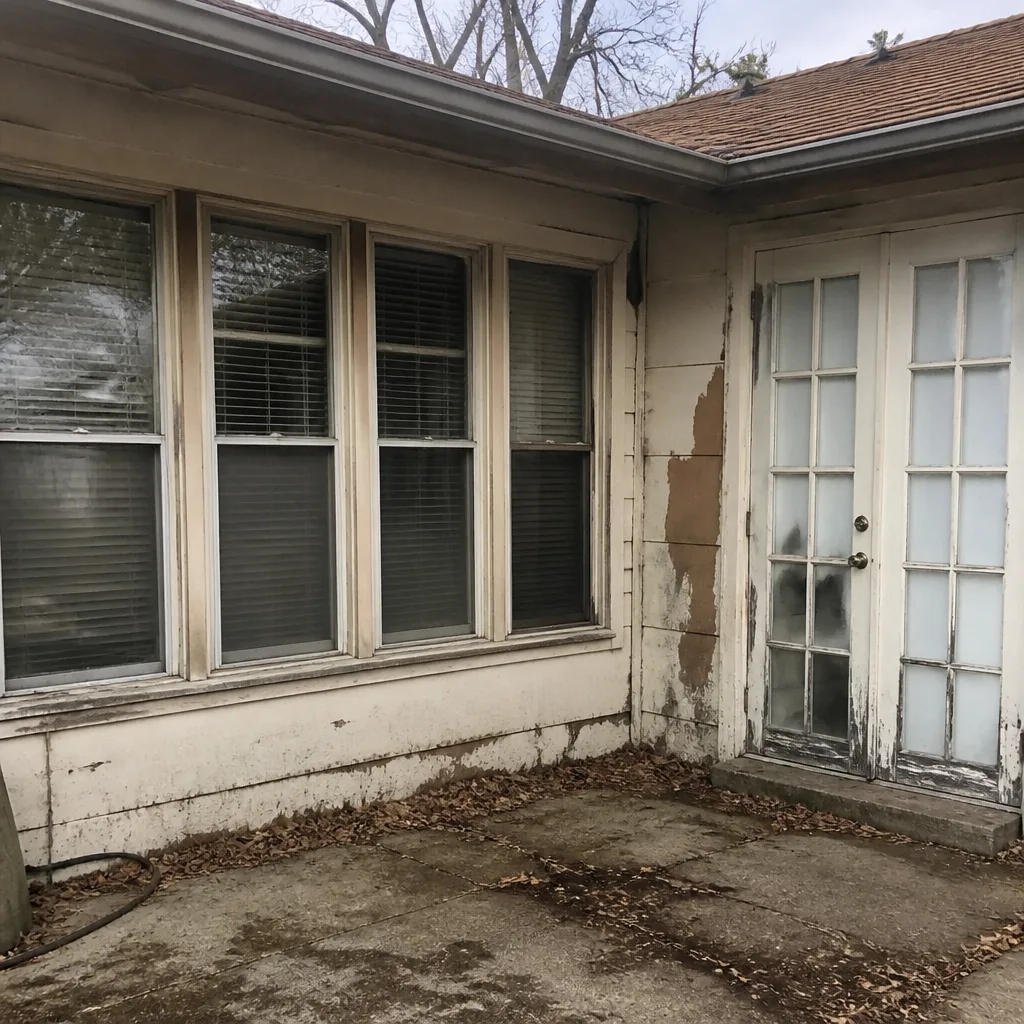
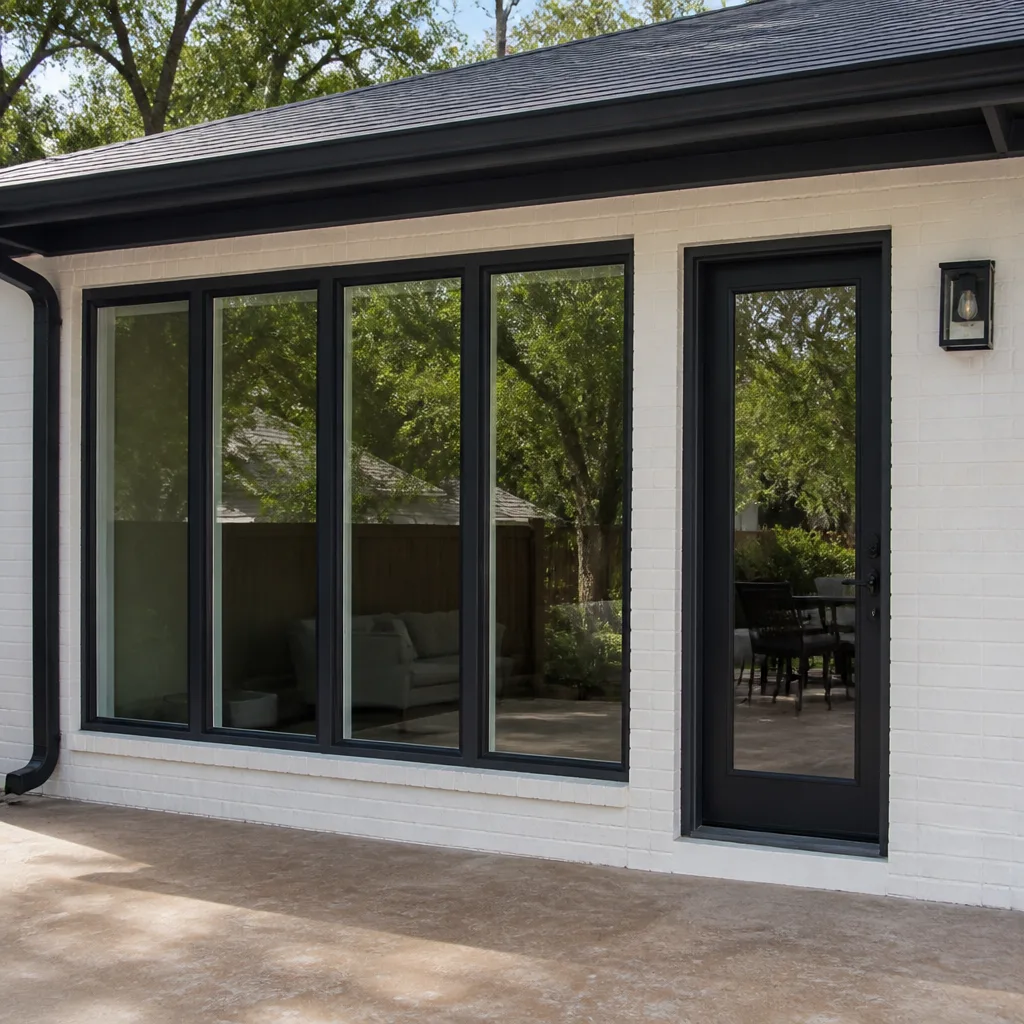
See the difference
 Before
 After
After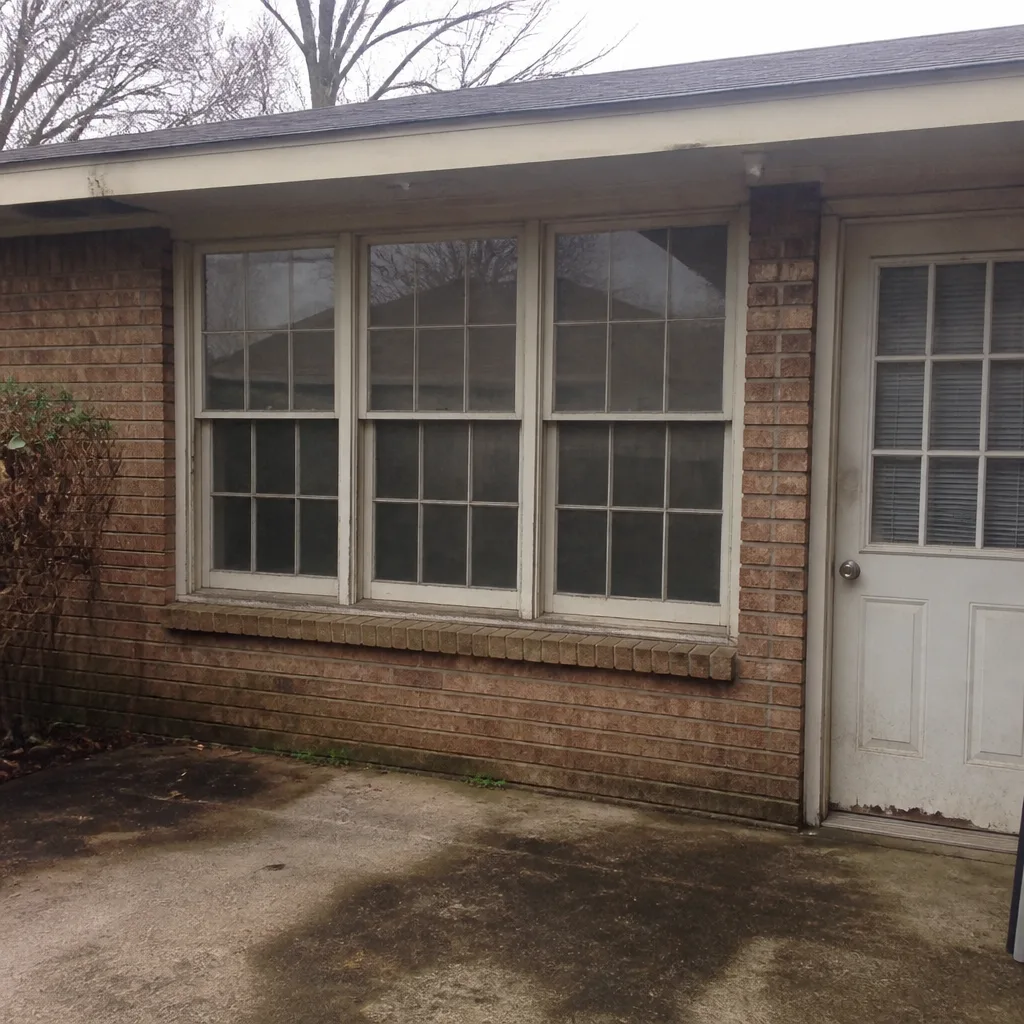 Before
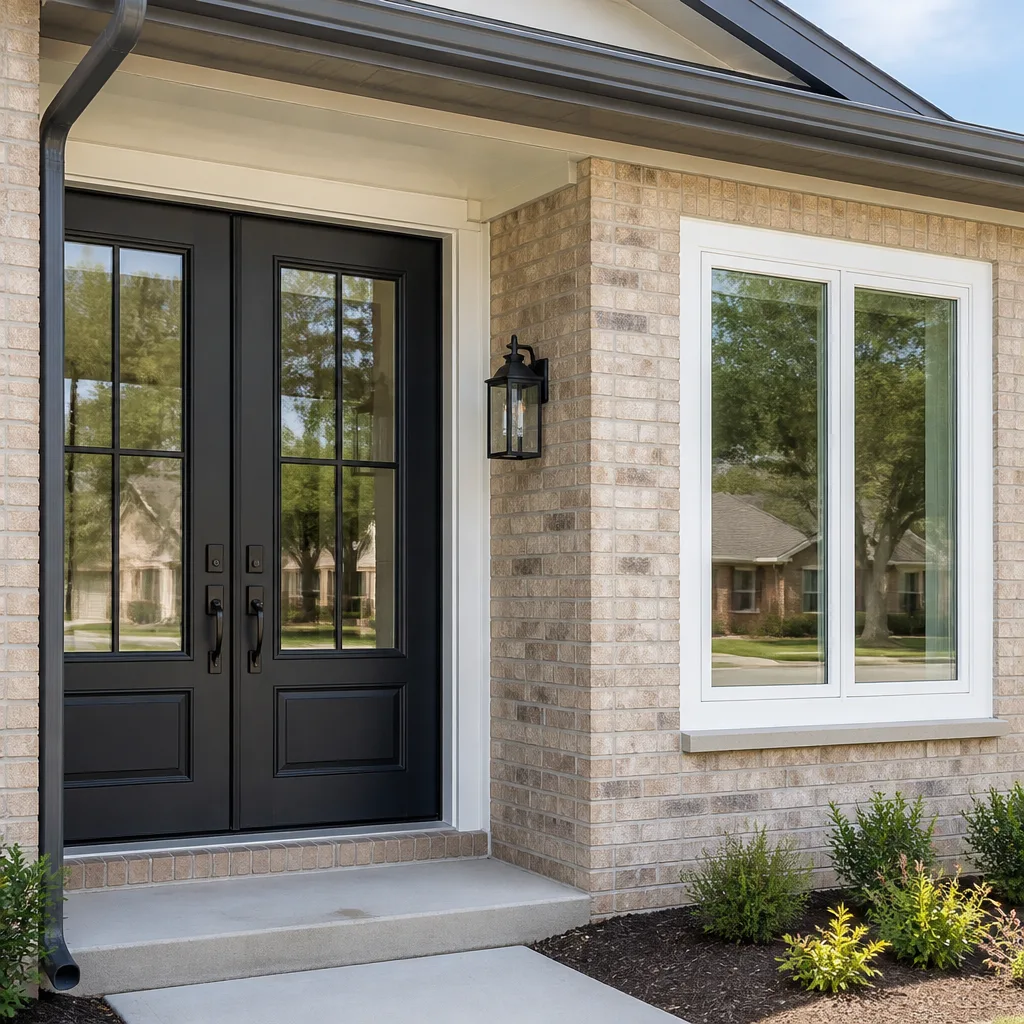 After
AfterWhen to Call a Professional
Call a professional if your window opening shows stair-step cracks in the brick above it, if you pull the interior trim and find rot at the sill, if the opening is not square, if a steel lintel is visible and rusted, if the opening size changes, or if the work touches a header. Call a professional for every exterior door replacement and every structural modification. The savings from getting it wrong once will exceed the labor cost of having it done right the first time.
Lightwell Windows Fort Worth offers free estimates across Fort Worth. We walk the property, identify the wall type, check the lintels, and hand you a written line-item price before anything gets touched. Call (682) 900-6694 to schedule yours. Learn more about our work at the Lightwell Windows Fort Worth home page.
Frequently Asked Questions
Yes, for same-size window replacements in wood-framed walls where no structural member is touched and the opening does not change. It becomes a permit-required project, and typically a licensed-contractor project, when you change the opening size, replace a lintel or header, repair structural framing, or work on a brick-veneer wall where structural integrity is affected. When in doubt, check with the City of Fort Worth before you cut. Call (682) 900-6694 if you want a professional assessment before you commit either way.
A typical vinyl double-hung window costs $180 to $340 at Fort Worth building supply stores, plus $35 to $65 in sealant, foam, and shims. If you have basic tools, total material cost runs $250 to $420 per window. Professional labor on a straightforward wood-framed swap adds roughly $80 to $180 per opening in our market. The savings are real, but so are the warranty and structural risks.
In most cases with brands like CWS, ES Windows, and ECO Window Systems, yes. The warranty language requires installation by a qualified professional, and manufacturers request proof of professional installation when you file a claim. A denied IGU failure claim often costs more than the labor you saved by installing it yourself.
Getting the new window plumb, level, and square in a rough opening that has shifted over years of Fort Worth clay-soil movement. The second-hardest part is properly sealing the exterior so storm-driven rain cannot find its way behind the wall. Both skills take repetition to develop, and the cost of getting either one wrong exceeds the labor savings.
Yes. The hybrid approach works well: a professional handles structural and flashing work, setting, and exterior sealing, while you handle the interior trim finish at your own pace. Agree on the scope split in writing before the work starts so the written price reflects exactly what is included and excluded.
Doors are heavier, they carry security hardware, they must be perfectly plumb in three dimensions to latch correctly, and they require a full sill pan flashing system to prevent water intrusion at the threshold. A door with sidelights or a multi-point lock multiplies the complexity. Professional installation protects the weather seal and the security of your home, which is why door installation in Fort Worth costs what it does.
The Bottom Line
The DIY window replacement question in Fort Worth is not answerable with a yes or no. It depends on the wall type. Wood-framed walls with sound framing make single-unit DIY swaps realistic and affordable. Brick-veneer walls make the same project structural, permit-required, and warranty-consequential. Doors of any kind are professional territory, and the hybrid approach on interior trim is the smartest place for most homeowners to save real money. Those who have done this work for years can tell you the pattern: the house whispers before it fails. For more guides & resources on reading those signs, explore our blog. Stair-step cracks, rot at the sill, a door that does not latch. Listen early, and the repair is a window. Listen late, and the repair is a wall.
If you are in Fort Worth and want to know which side of the line your house sits on, call (682) 900-6694 for a free estimate. We walk the property, name exactly what needs to happen and what it will cost in writing, and leave you with a clear picture of the work, the price, and the plan. Whether you end up doing the work yourself or handing it to us, the estimate is always free.
Written by Keith Yamada, Owner at Lightwell Windows Fort Worth, serving Fort Worth since 2010.
Six Reasons Homeowners Choose Lightwell Windows Fort Worth
Laminated glass and reinforced frames hold up to wind-driven rain, hail and flying debris, so your openings stay sealed when the weather turns.
Low-E insulated impact glass from our manufacturer lines commonly cuts monthly cooling bills 20-30%.
Laminated impact glass shuts out up to 40% of outside noise - traffic, neighbors, weather.
Monitoring services run $30-90 a month. Laminated impact glass resists forced entry around the clock, with no subscription.
Tighter seals and insulated glass even out hot and cold rooms and stop the drafts at the frame.
A full impact package upgrades curb appeal, buyer confidence and appraised value in one project.